
The moral questions that May We Feed the King raises, not only about the divine right of royals, but the nature of governing bodies, and moreover, the power a community can wield over the individual, truly make for an indictment of our time.
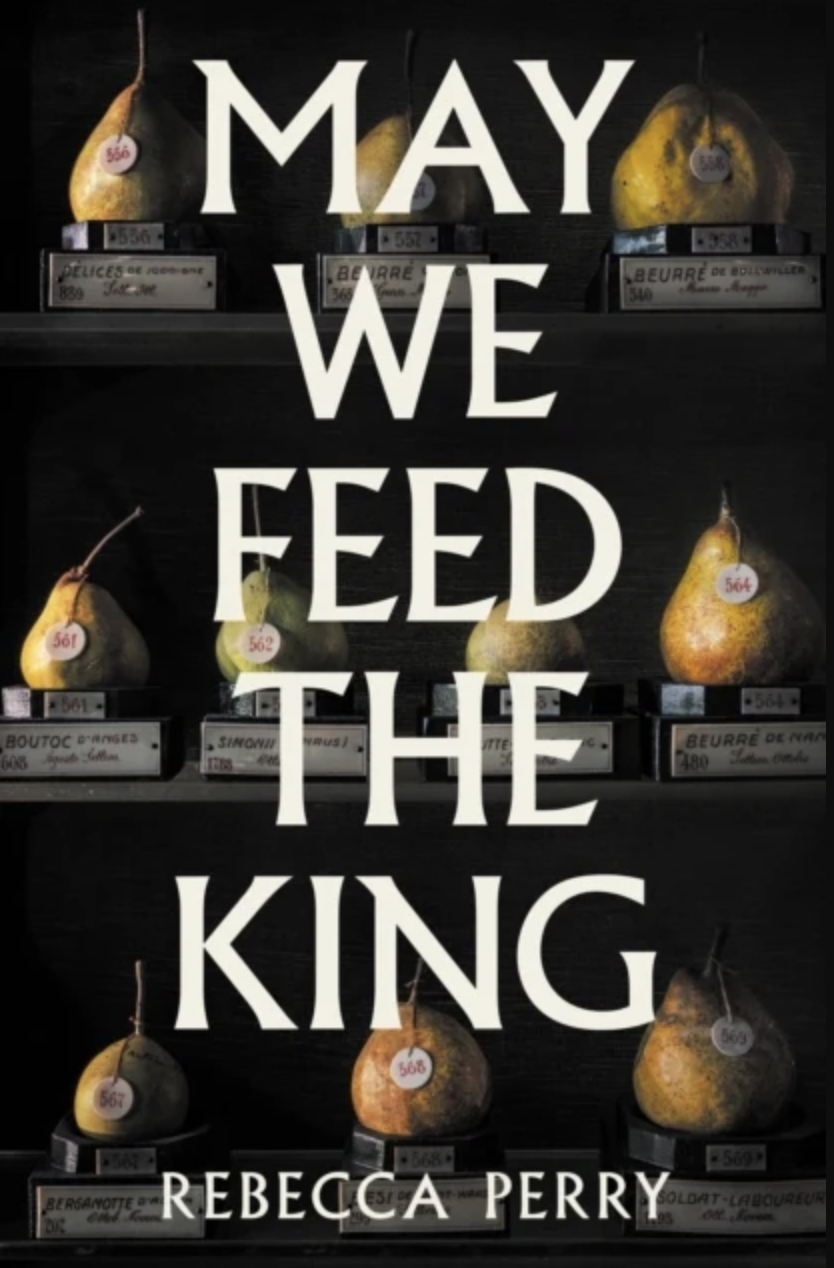
Rebbecca Perry | May We Feed the King | Granta Books: £15.00
Reviewed by Edward Heathman
Best known as a poet, Rebecca Perry makes her foray into fiction with this remarkably daring story about a medieval king who wishes only to do unkingly things. Told from the point of view of a curator commissioned by a palace to organise a public exhibition of its rooms for a commemorative event, what begins in a contemporary setting soon gives way to the core of the narrative, which takes place in an unspecified medieval period and traces the reign of a king in crisis with his role as a divine ruler.
The decision to focus on not just the medieval past of a royal but the available tools curators use to evoke such a thing may feel strangely apt if you have read Perry’s poetry. In her debut collection, Beauty/Beauty (which won the Michael Murphy Memorial Prize 2017 and was shortlisted for a host of other awards, including the T.S. Eliot Prize) she has a poem titled ‘The Execution of Lady Jane Grey’ that works as a sort of play script imagining the final words of the nine-day-queen moments before her beheading. Perry’s follow-up collection, Stone Fruit (both are with Bloodaxe Books), begins with a sequence called beaches which operates like a series of postcards depicting competing facets of the speaker’s psyche. The eleventh poem laments what happened ‘years ago// when I wanted a house for us/ a perfectly square house/ i wanted to paint the house green/ like a plant/ with the insinuation of a flower’.
This delight in artifice and what can be projected through it is also what makes May We Feed the King so captivating. In an earlier section of the novel, the unnamed curator lists off the products on a website specialising in plastic replica food products and notes ‘the most beautiful ham slice, with a pollen-like bread-crumbed perimeter. Slices of white lard curling almost imperceptibly at the edges, as if cut and left on the side to dehydrate.’
With a story that hinges on how it’s framed, you might think that having a narrator you feel close to would be crucial, but Perry avoids this in a way that captures the ritual custom of the artist who elects to be absent from their own paintings while also honouring the mode of the unreliable narrator, a device meant to both intrigue and keep the reader distantly aware of the construction of the narrative. There could also be something of the modernist notion that poetry requires ‘an escape from personality’ which Eliot wrote about in Tradition and the Individual Talent that Perry has borrowed from her background as a poet and utilised to effect in her fiction.
We are not given much information about the mysterious curator other than the scant reference paid to a possibly tragic break-up. What’s made clear is that she sees her work as a serious outlet for her feelings, rather than family and friends, and that her creation of successful exhibits is a worthwhile enough occupation to channel her energies into. As the novel progresses, she describes how her own relationship to food changes the more time she spends with the artificial food she must position for the palace.
This othering of consumption could be read as a form of ascetism from one angle, a food-related disorder from another, or perhaps even a commentary on contemporary alienation, where the mass availability of online content only enmeshes us in the hyperreal, instead of reality itself. The short chapter style of the novel certainly reflects the quick scroll of a social media page. The decision to give each chapter a title also mimics the labelling of a painting in an exhibition, before you read on below to a description of the piece itself.
The novel gathers its momentum when it enters the embedded third-person narrative of the unnamed king and provides us glimpses of his everyday life as he tentatively embarks on his rule with miserable results. Upon finding him in the palace records, the curator starts to refer to him as ‘my King’, implying not just a specific fondness, but a claim – and an awareness – of the power that the present holds over those of the past.
Where a master of historical fiction such as Hilary Mantel might swear by fidelity to fact and stress the hold that the past has over the contemporaneous, Perry opts to remind us that historicity works mostly to account for a supposed narrative of events, where who gets to record things and how accounts are collected are what makes their contents substantial. The conjuring of this king-who-would-have-been-happier-as-a-gardener going about his quiet boycott, ‘keep[ing] the country in a sort of stasis, like a yolk suspended in its clear jelly’, while he refuses to declare war on political enemies, demand taxes or decide on the marriages of his courtiers, makes for curiously enthralling reading.
What should not also go unmentioned is the visceral and sensuous language Perry employs to depict the scenes in the historical sections. This proximity to someone often sheltered from public display often feels delectably voyeuristic, with a mounting sense of paranoia as the king’s advisors plot and panic adding a desperate tension to the novel’s climax.
The moral questions that May We Feed the King raises, not only about the divine right of royals, but the nature of governing bodies, and moreover, the power a community can wield over the individual, truly make for an indictment of our time. This book promises to enchant readers seeking either the atmosphere of Sarah Waters’ historical fiction or the psychological restraint seen in recent Gwendoline Riley novels.
Reviewed by Edward Heathman