
Why does the writer have to be subservient to the reader?
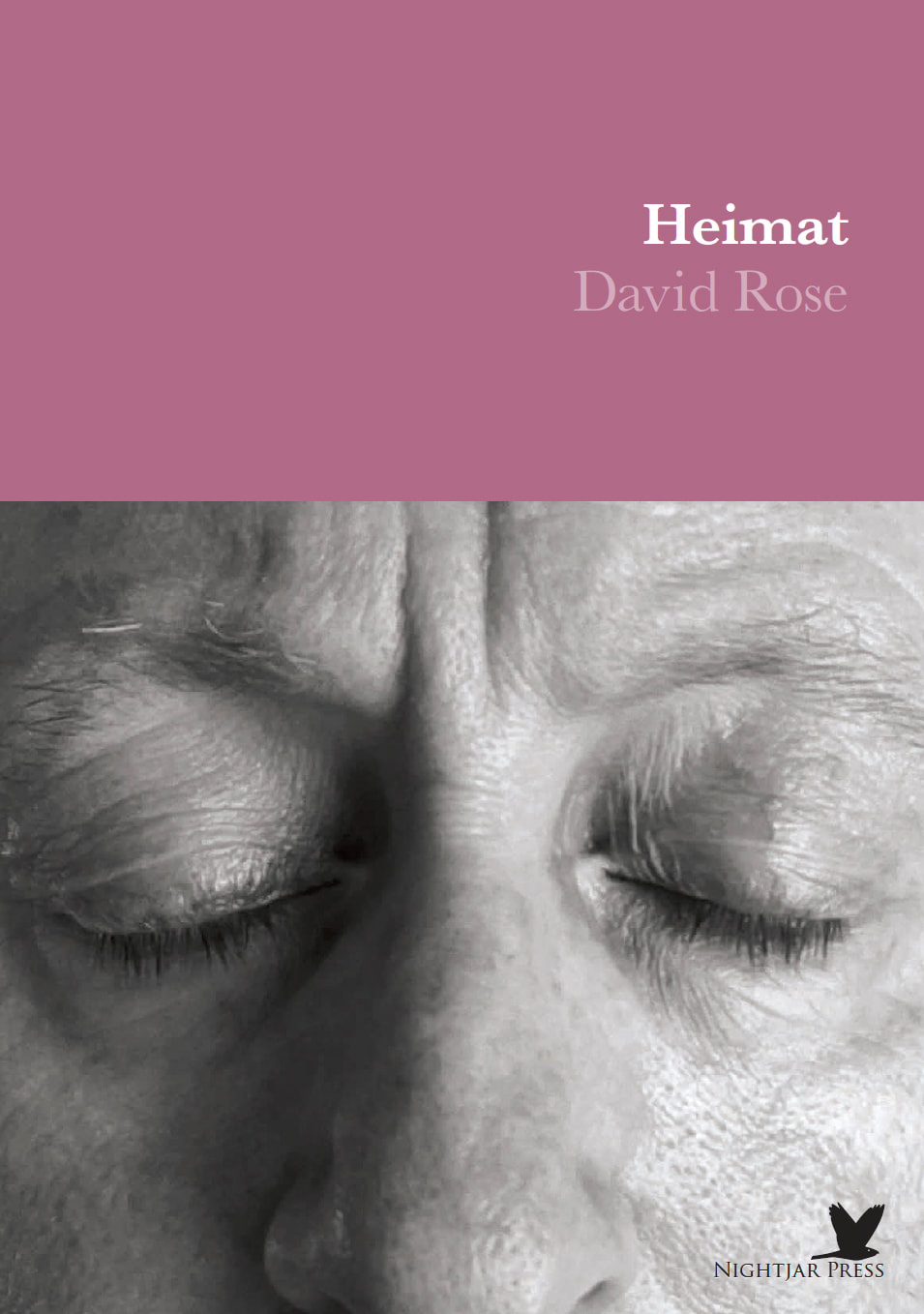
David Rose | Heimat | Nightjar Press: £3.75
Reviewed by Paul Kavanagh
‘All my memories gather ’round her,’ sings John Denver. David Rose sings too, but he doesn’t sing Country Music. But the sentiment is the same. It is older than the written word, older than storytelling. The German Romantics called it Sehnsucht. The Greeks called it Nostos. Even those hand-drawers deep in the subterranean depths where the ghouls play with the gods daydreamed about a time when the Neanderthal roamed the earth and the shit had yet to hit the fan. David Rose calls it Heimat and the song Rose sings flutters on the same nerve-endings. John Denver called it the ‘place where I belong’. Both yearn to reclaim their soil-memory.
Heimat is four pages long. Yes, only four pages. But what four pages! The verso and recto are beautifully coated like an Egyptian mummy. Nightjar Press’s exquisite simplicity is joy to behold, and for only three pounds, you too can hold and read Heimat. Three pounds? Yes, only three pounds. And for a short piece, it is packed. You will get your money’s worth, trust me. Those four pages are packed like the Egyptian mummy. Wagner. German Romanticism. Eliot. Halcyon Days. Old Age. Bernhardian thanatic wishful thinking and oneiric splinters causing disturbance within like the nagging old bitch with diseased gums … Death.
Carrion for Cioran.
I loathe to mention Krapp. I loathe to mention. I loathe to. I loathe. I.
‘Life is old there, older than the trees,’ sings John Denver. Before the plane crashed. David Rose is always fully controlled. Always above the debris. Each word is picked with precision. The superfluity is left with the fat on the floor.
Heimat is not a difficult read. The idea that propels the writing is as ancient as old and blind Homer. ‘To the place.’ You call it wanting to return home where the soil is filled with memory. I call it being smothered in mother’s chubby arms once again, and having all worries eradicated, and playing on Blueberry Hill with that nonpareil innocence. Our pining for the past is a pining for childhood, I feel. Rose taps within this short piece, out of these chiselled sentences, the longing that we all share. It is not a difficult read … it is universal. Getting old is … Rose uses the oldest emotional technology humans own. It is not nostalgia. It is not sentimentality. The past is a new cosmology where entropy has eaten away at the glue that holds the sentences together. Rose knows how to write a sentence.
Edward James had a strange idea. He built a Surrealist Eden within a subtropical rainforest in the Sierra Gorda mountains of Mexico. He called it Las Pozas. Of course he did. Remember Magritte and the mirror. To pay for this adventure, he sold his collection of Surrealist paintings. This I admire above all things. James created his own Heimat with the objects he cherished the most.
Why does the writer have to be subservient to the reader? How obsequious does the writer have to be before the reader is happy? I need to reread Heimat, again and again. Failure is a reader’s prerogative, and I wish more readers would allow this luxury to fecundate within. To fail is not to fail; it means you get the chance to retry and retry again. Please buy Heimat and secure a place for such creations of beauty in this dour world … ‘Country Road, take me home. To the place …’ sang John Devner.
Reviewed by Paul Kavanagh