
Shirking the moral constraints of autofiction, this novel provides ecstatic multiple narrative planes that wrestle instead with the uncanny
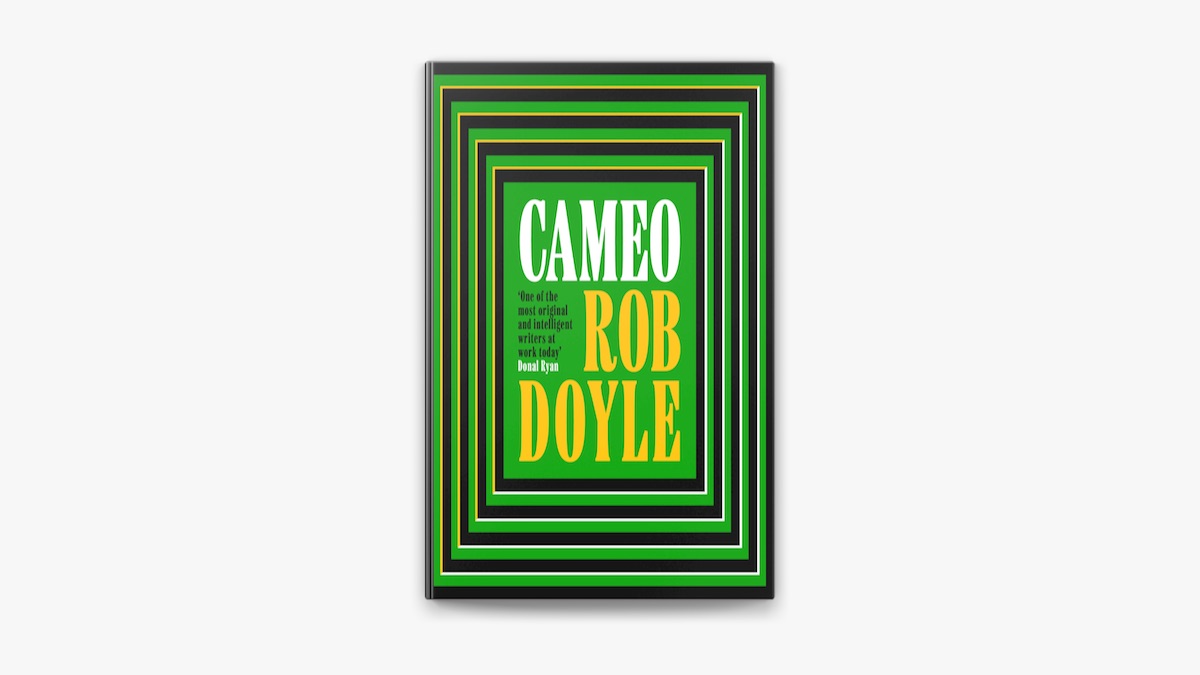
Rob Doyle | Cameo | Wieden & Nicholson: £20
Reviewed by Edward Heathman
At one point in Cameo, a narrator presented to us as Rob Doyle explains ‘I began to have what I thought of as serialised dreams… In these dreams I was older, with a tougher, heavyset face that I glimpsed in rear-view mirrors… This dream-self was a taxi-driver in Dublin…’ The Dublin in question is described as one set in the near-future, where international war has broken out across Europe, possibly the rest of the world, and drones attack cities, presidents claim to have been contacted by alien civilisations, and people worship and ritually sacrifice others to the god of a ‘new AI.’
But if you thought his was just another speculative novel of the shrill and moralising dystopian variety, you’d be very, very wrong.
The taxi-driver being dreamed of, who we are told is named Henry K. Dillon, not only sees Dublin as a city turning ‘foreign’ throughout his Night Taxi ‘Excerpts’ but views himself as a subject that is becoming relatively strange as well. What might appear at first to be a banal protagonist for such an audacious novel is subverted when the narrator of the ‘Rob Doyle’ section admits that he believes the night-driver character has ‘written the story of my life from beginning to end.’
It transpires that Henry K. Dillon is not merely a taxi-driver but also an Irish novelist who goes on to purportedly write a series of immensely popular novels which follow the illustrious life of an author known not as Rob Doyle, as you might expect, but Ren Duka. The majority of Cameo relates bibliographical accounts of these hypothetical fictions. Other vignettes involve characters that are connected only via their relation to the Byronic force and legacy of this mysterious Ren Duka. One is a woman inspired by his novels to write her own series of autofictions before embarking on a career as a ghostwriter. Another character is a disgraced actor who once starred in several Ren Duka film-adaptions, only for his ex-co-star to come out later on with claims against him of sexual abuse.
If you’re not already feeling just a tad overwhelmed, rest assured that this is only the tip of the metafictional iceberg when it comes to Cameo.
Artistic futilities and yearnings seem to be the driving catalyst throughout each element of the story, while the varying nature of the telling is also equally important. In Cameo we are presented with layer after layer of claims to narrative authority that not only invoke Roland Barthe’s claim in The Death of the Author that to provide a text with an author is to impose a limit on its content, but push this idea even further: by giving us a multitude of authors we are unsure which one is having the final say, dictating the original material, or is dead or alive.
Aside from the authorial neurosis, this book has serious philosophical and literary concerns. Any sense of a consistent, universal or principled self is not only muddied but mocked. Contemplating the taxi-driver novels, the character of a Japanese illustrator who is given his own section reads them as a testimony to ‘the condition of life in the twenty-first century, and in particular the mutating relationship between art and reality… a new mode of fiction is called for that can mirror the widespread sense that reality is dissolving before our eyes.’ Here we have a novel that announces its own raison d’être.
Scenes and story lines that might have been treated as major conflicts in other novels are quickly brushed over in this one. From Ren Duka being kidnapped and brainwashed into acting as a mouthpiece for Islamic terrorists, to his public persona veering into the territory of your average right-wing populist grifter (he’s even mentioned in passing as being in the Epstein files), it’s as if Doyle is suggesting contemporary consciousness can no longer singularly process its problems in a reality increasingly generated by and reflected in numerous technologies. Rather than explaining its characters’ motives the novel is more concerned with letting their subconscious desires run riot (think The Matrix if it was written by Muriel Spark).
While the fractured state and vying cast of this novel might seem overbearing, Cameo is nevertheless thoroughly enjoyable. It requires significant concentration to keep up with each narratorial switch, but the language is direct and easy to follow. The scattered form of the narrative structure has not been chosen in an evasive or pedantic gesture, but to honour the radical tradition of the nouveau roman. By framing the novel inside of an interview with the notorious Ren Duka (it’s hard to miss the doubling implied here with the real author’s matching initials) there’s a stressed earnestness to the tone that invites confidence. And furthermore, the bulk of the story being focussed on the Ren Duka alter-ego gives the novel the thrust of a speedy literary biography as we witness his fictional life-series play out in subsequent (dis)order, even if this comes with the sorts of narrative dead-ends rife with minor characters of the genre.
Readers of past Rob Doyle books will relish the psychological complexities, recreational drug use and sexual romps, while also appreciating the spiritual insights and literary cunning. If you found yourself taken with the vignette design of his last novel Threshold you ought not to miss out on Cameo, in which he masters the style. This book will go down well with fans of Garth Greenwell, Brett Easton Ellis, David Mitchell, Angela Carter, Martin Amis or Philip Roth, and amuse those fatigued by the dogged sincerity of the Karl Ove Knausgảrds or Sally Rooneys.
Reviewed by Edward Heathman