
A haunting, revelatory, and satisfying continuation of the apocalyptic world Danny Boyle has created.
28 Years Later: The Bone Temple | dir. Nia DaCosta | Reviewed by Joseph Hunter
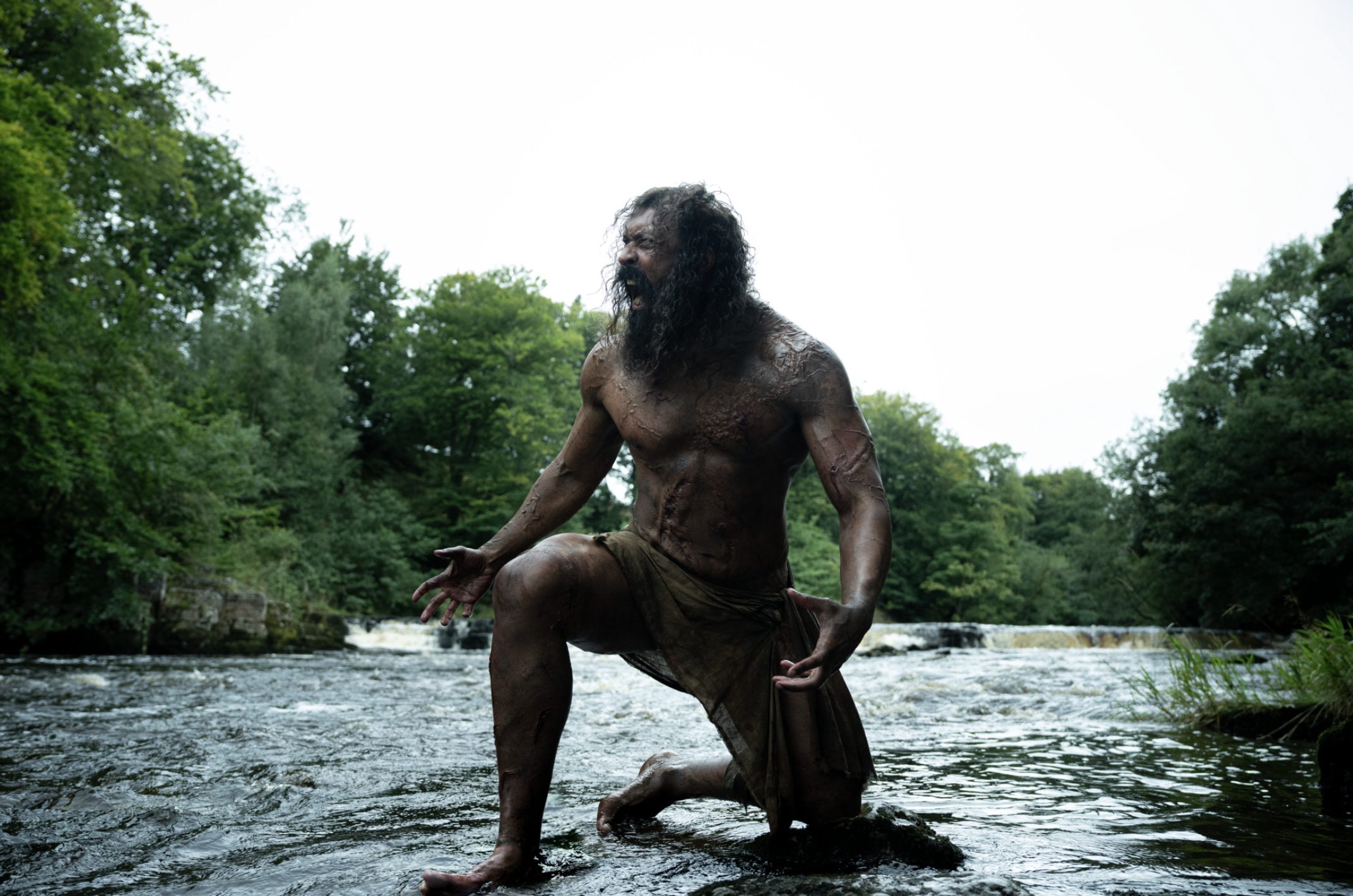
Danny Boyle has made the apocalypse look beautiful. It’s haunting, too: the eerie stillness of the woodlands, grown back in force over the countryside of the northeast of England where these sequels are set. A wild countryside now lush, deep, dark – and dangerous. A stillness punctuated by the shrieking, groaning, hungering of the ‘infected’ who now, decades after the crisis, are naked and earthy, all clothing rotted away, layers of dirt and dried blood and sunburn and scar tissue etched into their skin. Nia Da Costa, with 28 Years Later: The Bone Temple, builds on the atmosphere and aesthetic evoked by Boyle in the previous film and soaks it in even more blood and viscera.
The end of the previous film, in a rather jarring final five minutes, saw the introduction of a new group of protagonists, the Jimmys, fronted by Jack O’Connell who plays the part of the psychopathic ringleader with relish and a gold-laced grin. The Jimmys, in case it isn’t obvious from the aesthetic, style themselves in the vein of notorious paedophile Jimmy Saville, which is a bold choice but works well in adding to the nightmarish, world-out-of-joint feeling. Jimmy Crystal (O’Connell) and his group were formed by those who were young children at the time of the outbreak almost three decades previously, meaning that in the film’s lore the revelations about Saville’s crimes never happened. Yet it’s fitting that Saville’s demeanour and abiding menace has nevertheless shaped the Jimmys, who under Crystal’s leadership have turned violence and sadism into a vocation, using knives to slaughter infected and uninfected alike.
Spike (Alfie Williams), the boy whose journey formed the basis of the previous film, has been recruited by the Jimmys, where he is chaperoned and somewhat cared for by Jimmy Ink (Erin Kerryman), who seems likewise disenchanted with the ritualised brutality she and her peers are encouraged to commit. Meanwhile Dr Kelson (Ralph Fiennes), the shaman-like doctor who has built the titular bone temple from the scoured and purged skulls of tens of thousands of infected, coaxes the huge, muscular (and remarkably well-endowed) ‘Alpha’ infected, nicknamed Samson, into a kind of reluctant friendship truce brought about by judicious use of his supplies of morphine. One of the biggest and most rewarding surprises of this film is the performance of Samson, played by Chi-Lewis Parry, who when rendered docile and engaged by Kelson is able to evoke empathy and transmit complex emotions through deft acting with the eyes and micro facial expressions. Kelson has developed a theory about how the infection works, and in his encounters with Samson attempts to communicate this to him and begin trialling a cure. The way that hope of progress is deferred until a certain key, explosive moment (which I will not spoil) is incredibly satisfying, building to a revelation that is among the finest I have experienced in a film for a very long time.
The Jimmys encounter Kelson and his bone temple, setting up the final act of the film by means of a tête-á-tête between Crystal and Kelson in which the former reveals his belief that the latter is Satan himself, and therefore his father. Kelson, with a careful kind of therapy-talk, engages Crystal just enough to placate him, in a nice echo of the earlier scenes with Samson. The final showdown between the Jimmys and Kelson leads to revelations that set up the third film of this ‘sequel trilogy’ in such a way that I am convinced Boyle is set to round off the series with consummate skill.
You wouldn’t think that there was any more blood to let from the genre of zombie films. And yet Boyle and DaCosta (and screenwriter Alex Garland) have found more. Aesthetically, with the vast haunting lush green primordial forests reclaiming the land. Conceptually, with the pre-outbreak world completely lost to decay and death, and a new and strange world being eked out in the wreckage. And, of course, narratively, with hints at revelations concerning the infection and a possible cure that feel well-earned and satisfying. It’s the end of the world as Boyle knows it, and it feels fine.
Reviewed by Joseph Hunter