
Rejection provides in-depth case studies of performative males, cuckolding, finance bros, and LLMs, while leaving it to the reader, much like the internet, to make their own interpretations
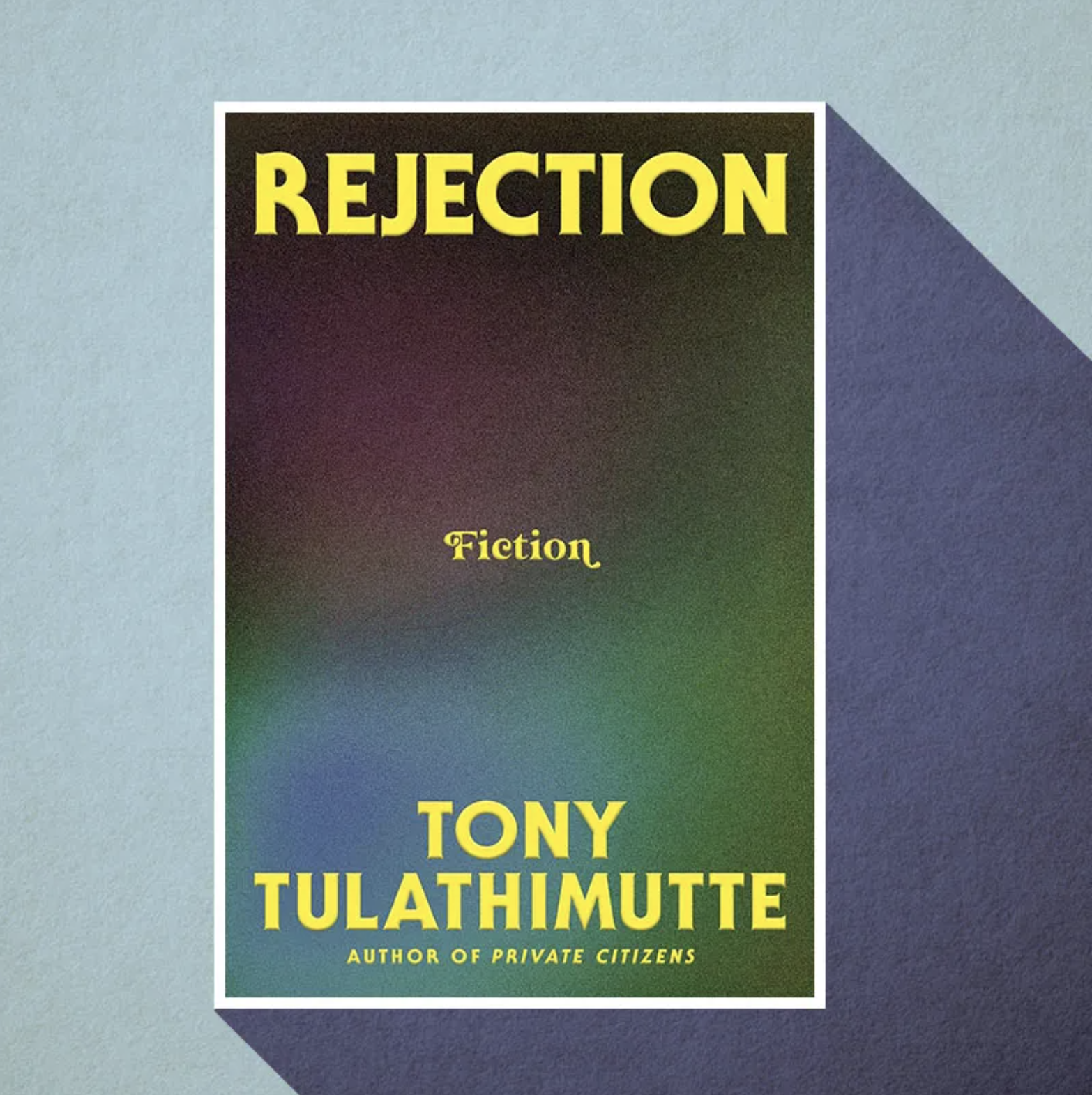
Tony Tulathimutte | Rejection| Fourth Estate: £16.99
Reviewed by Devarya Singhania
In his second novel (or novel-in-stories as it has been referred to in some places), Tony Tualathimutte complicates what it means to live on and live for the internet. You might expect the characters, much like his debut novel Private Citizens, to be graduates of the tech world. In Rejection, there is no singular ‘tech-bro’ but rather an amalgamation of ‘regular’ people simultaneously haunted and seduced by contemporary technology, and sex as it pertains to it. Rejection provides in-depth case studies of performative males, cuckolding, finance bros, and LLMs, while leaving it to the reader, much like the internet, to make their own interpretations of these distant, parasocial relationships.
While Private Citizens was considered a ‘millennial’ novel, Rejection, inherently is a gen-z one. Even though the characters that exist in the novel belong to the millennial era (none of them are born post 1997 if you consider 2025, the year of its publication, as the year it is set), they emulate, in my opinion, gen-z issues.
In the introductory story, “The Feminist,” Tulathimutte presents a hyper-activist male, who even knows “his sadness” due to a lack of sex is “a symptom of his entitlement.” How charming. He knows that comparing his female friends to actresses is insensitive even though he’s “demarcat[ed] fantasy from reality” and is thus, in his own admission, sensitive. The protagonist expects his self-awareness, his “principled feminism” to result in at least one of the “billions” of girls being attracted to him. No one is. Not even those he initially regarded as peers, way back when, in his all-girls school. He was one of the only boys there. His frustration at his lack of charm, the futility of demonstrating his “unselfish” feminist thoughts towards the end, is what ultimately gives life to the story.
The protagonist resorts to violence (implied by the cliffhanger ending) due to said anger. He effectively ends his performance. What Tulathimutte does agonisingly well with this protagonist is that he blurs the line between feminism, misogyny and misandry. To the protagonist, the way he acts around men and women, is always with the intention to have sex with women. He majors in Gender Studies where he notices an advantage of there being a “paucity” of men in the course. While he reports his male coworkers for offering “unsolicited” dating advice, he verifies that advice by consulting his female friends. He even masturbates to the images of his female friends, after they’ve ‘rejected’ him. It can be argued that him consulting his female friends about the ‘dating advice’ that she says cannot be universally applied to “every woman” is considerate. That he is not assuming any authority over a woman, and in fact, deems his female friends to have the same authority as his male coworkers (should be obvious, I know, but he wanted praise). He didn’t enjoy Gender Studies (there’s certainly no indication of it) but did so, just to get the female students’ attention. Why must they only exist for your gaze? Where is feminism, now? And of course, the petulant masturbation speaks for itself.
The reason I fixate so much on this story is not because it is some beyond-imagination perfection. Tulathimutte uses a similar template across the other stories.
We see another sexually repressed protagonist in “Pics.” Alison, in her late twenties (enters her thirties as the story progresses), has “never been in love.” Given the lack of success she’s had dating wise, she has sex with her best-friend, Neil, to whom she’s not at all his type “physically.” He even takes a picture of her during a blowjob for the thrill. Across the story, Alison turns to her online friend group for validation of her actions–while going on bad dates, having bad sex, and trying to find better options through the myriad of awful profiles on dating apps. Her friends are very supportive of her hook-up with Neil, loving it for their “kween.” Once Neil abandons her and goes after someone of a different “race” (the most noticeable detail Alison remembers), and the boys on the apps do not satisfy her, Alison’s frustration boils out and she lashes out with the friends, over-text, and ends the support. Much like the protagonist of “The Feminist” losing his feminist principles, the protagonist here too, loses their main community keeping them functioning.
Even in the stories “Ahegao, or the Ballad of Sexual Repression,” “Our Dope Future,” and “Main Character” the protagonists, severely obsessed with their body image, de-aging and cultural assimilation respectively, begin to lose control of their lives due to a lack of sex. In “Ahegao,” the protagonist, Kant, wrestles with his sexuality, eventually resorting towards, in the horniest and most debilitating way possible, sending a detailed script for a BDSM porn video to a male pornstar. Only to send that script to a list of family and friends. In “Our Dope Future,” the “37m” protagonist offers a misogynist lecture on dating women, after dating Alison from “Pics.” He also has trouble forming a family, and only offers Alison disappointing sex.
While it is revealed in “Main Character” that the posts were all LLM generated, and hence the content of the racism against Bee (the protagonist) in university may or may not have happened, it is also revealed that the LLM posts earliest version was rooted in some fact. Bee, also, does not understand the sexualisation of the “minor-coded” Timothee Chalamet.
The central question remains: can a lack of sex or even just bad sex, ruin lives? Through slightly hyperbolic but not unrealistic possibilities, Tulathimutte in his novel-in-stories leaves the reader in desperate need for sex. It warns us with an ‘or else’ probe. While sex in this novel too, is ‘real’ the stories integrate the changed definition of a relationship due to tech. Through this entire facade of what we must seem like online, we forget to satisfy those we see in reality.
Reviewed by Devarya Singhania