
In defending the mountain lions of Los Angeles trying to hunt humans, the novel compels the reader to question whether, in fact, humans deserve it
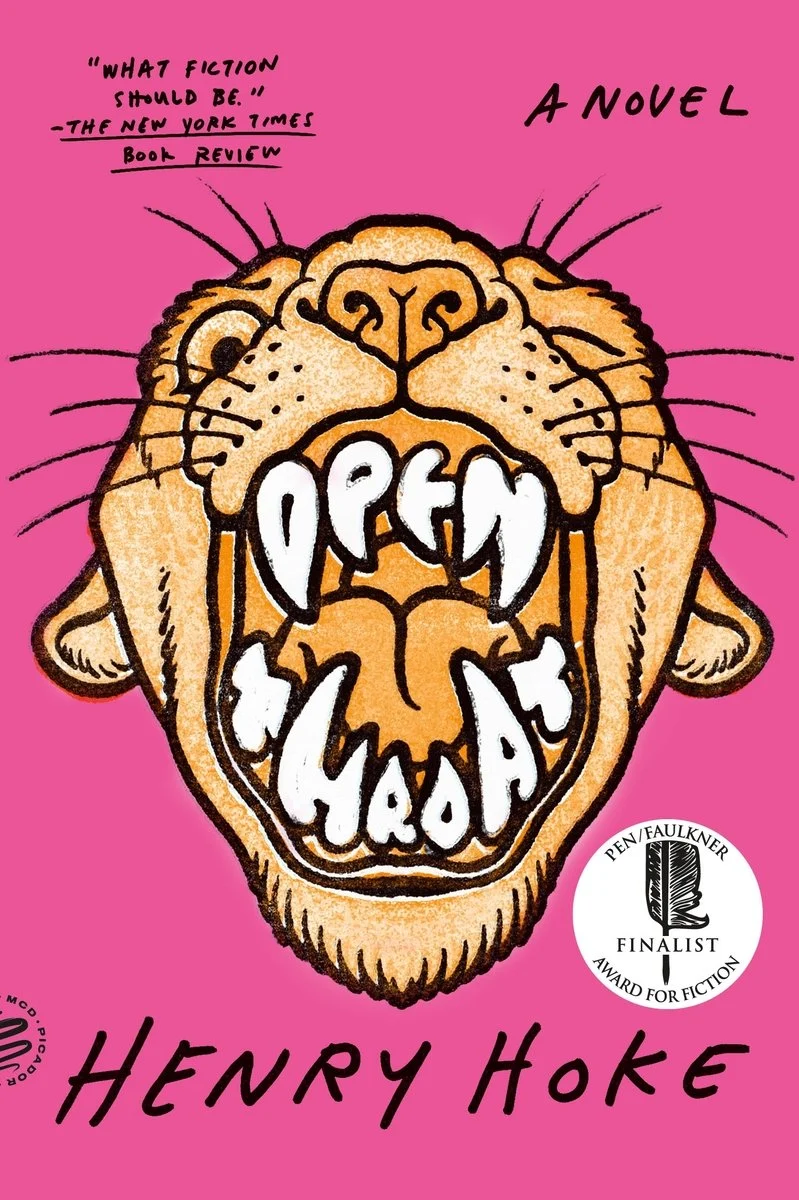
Henry Hoke | Open Throat | Picador: £9.99
Reviewed by Devarya Singhania
What if you could communicate with the thing trying to kill you? Could you convince it not to? Henry Hoke’s latest novel challenges the idea of desire, intent and cause by exploring the journey of a mountain lion in Los Angeles (which the novel calls “ellay”). I wonder if this lion is inspired by P-22, the infamous celebrity lion of the Hollywood Hills, because Hoke’s protagonist also lives above the Hollywood sign.
The unnamed cat (nicknamed “heckitt” later on by a character named “little slaughter”) observes humans as they pass through the trails. It is able to hide from them, sometimes inside bushes, sometimes under rocks, and notice how they have sex, argue about relationships and offer half-hearted ramblings about American politics on their walks. The unnamed cat is tiny, probably a baby.
As the novel progresses, the unnamed cat becomes more curious about the activities of the humans. The randomness of their discussions, the sound of the blood in their veins, and their seeming fright from a small cat like it–all confuse the cat. It is attracted by the bulging veins of a man with a whip, wondering how his blood might taste, but is also protective of a stranger’s dog and shoos the coyotes away when they circle the dog. Maybe he was just hungry at the beginning. Anything looks tempting at that point. We’ve all been there.
It isn’t until the halfway mark that the novel highlights its primary conflict. The same man whose vein the cat found attractive, now lights the “tent” on fire where the homeless people live. This was where, we find out now, the cat was living too. It calls that area the “village.” When the cat tries to help them survive, by even dragging a woman out as the tents burn, the people are still terrified by it. Even though the cat makes it amply clear to the reader that it will not attack the humans, the people flee at its sight, even dropping the buckets of water that they brought out to tame the fire.
The complication of intent is interesting here. For the humans to, in a moment, just ignore the demonic actions of the man with the whip, and villainise the cat who was helping them, sums up the distance between the creature and them, that eventually results in the ending of the novel. This scene can be read in many ways. The obvious ‘othering’ of the cat and embracing of any human or member of the same community, the idea of size and appearance being disproportionate to the threat assumed, and even a complicated way of presenting what’s ‘animalistic’ and what’s not.
Knowing that this cat does frequently think about killing animals across the novel, some for food, and some out of frustration, it can be argued that the cat is a potential threat to the humans. Even though, towards the second half, he is virtually adopted by a character named “little slaughter” who cares for it at her home, and the cat reciprocates the tenderness, it occurs largely with a distance between them. The cat doesn’t understand this person, and neither does she. But the cat communicates to the reader that it has no discernible reason to harm her, and eventually, as a result of the care, also feels protective about her. It notices her loneliness, and is glad to be a companion.
It isn’t until the very end that the cat, when on an escape from home with “little slaughter” spots the same man with the whip, that he decides to open up the car door and kill him. He succeeds, quite easily, and feels mighty about having the man’s guts in its mouth–as it wondered about at the very beginning. What else could it do to the person walking free, after destroying its home?
What the novel does well in concept though, I feel it lacks in prose. I thought the overall conceit of the things humans do against other humans, and by a consequence animals, brings forth so many conflicts about agency, punishment and morality. None of which are ‘answered’ in the novel, primarily because it is a baby mountain lion talking to us. No one knows what or how it feels.
The sentence structures though, after a point, get exhausting to read. The lack of punctuation is an interesting choice, and certainly works when the novel introduces one-to-two word sentences, in building up the tension, but the longer paragraphs are very hard to read. And this too, doesn’t serve the prose in my opinion. It’s not that by slowing the reader down, the reader gets more information. It just seems confusing. And while I understand the language choices undertaken to alienate the lion’s voice from the humans, I felt it was quite inconsistent. The lion hears certain words (like “ellay”) not as the English word but syllabically, and not the others (like “therapy”). I never felt quite situated in the lion’s frame of mind across the novel. In parts, yes, when the lion interacts with other humans, but never when it is contemplating alone.
By the end, once the reader looks around them, they realise they understand very little. The novel is successful in changing the reader’s trust around other humans, and makes us wonder about how many ‘incidents’ which are caused by us, go unnoticed–or worse, when an animal offers protection, how often we vilify it because of our preconceived notions. If you’ve not harmed the animal in any way, why are you fearing it? But I fear, even at the end of this novel, I still distrust mountain lions, because I wasn’t convinced about their mentality across the book.
Reviewed by Devarya Singhania